
← Back to Build Guides
All-Flash NVMe NAS Build: Silent Low-Power Storage (2026)
Build a completely silent all-NVMe NAS with under 15W idle power. PCIe bifurcation, ZFS tuning, and 10GbE networking for maximum performance.
Published Jan 1, 2026Updated Jan 1, 2026
10gbefanlessnvme
The All-Flash NVMe NAS: Building a Silent, Low-Power Home Server (2026)
If you've ever been kept awake by spinning hard drives or cringed at your NAS power bill, an all-NVMe storage server might be exactly what you need. With NVMe SSDs now offering 4TB capacities at reasonable prices and power consumption measured in fractions of a watt, building a completely silent, ultra-efficient NAS has never been more practical.
This guide walks you through building an all-flash NVMe NAS that idles under 15 watts, makes zero noise, and delivers performance that spinning rust simply cannot match.
Why Go All-Flash in 2026?
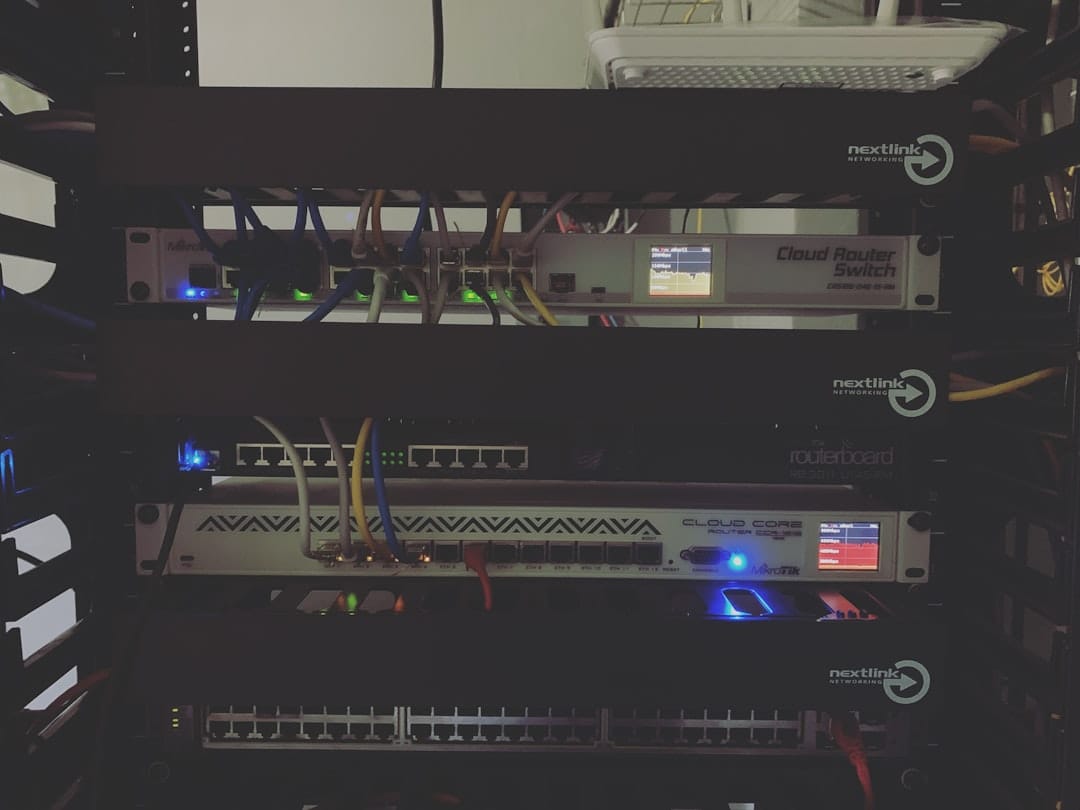
The economics of flash storage have shifted dramatically. Here's what's changed:
Price Per TB Has Plummeted

According to Tom's Hardware's SSD Price Index, NVMe pricing in 2025 looks like this:
| Capacity | Price Range | Price/TB |
|---|---|---|
| 1TB Gen4 | $50-80 | $50-80 |
| 2TB Gen4 | $100-160 | $50-80 |
| 4TB Gen4 | $250-400 | $63-100 |
The sweet spot is 2TB drives for price-per-TB, but 4TB drives save precious M.2 slots and offer better value than ever.
Power Consumption is Negligible
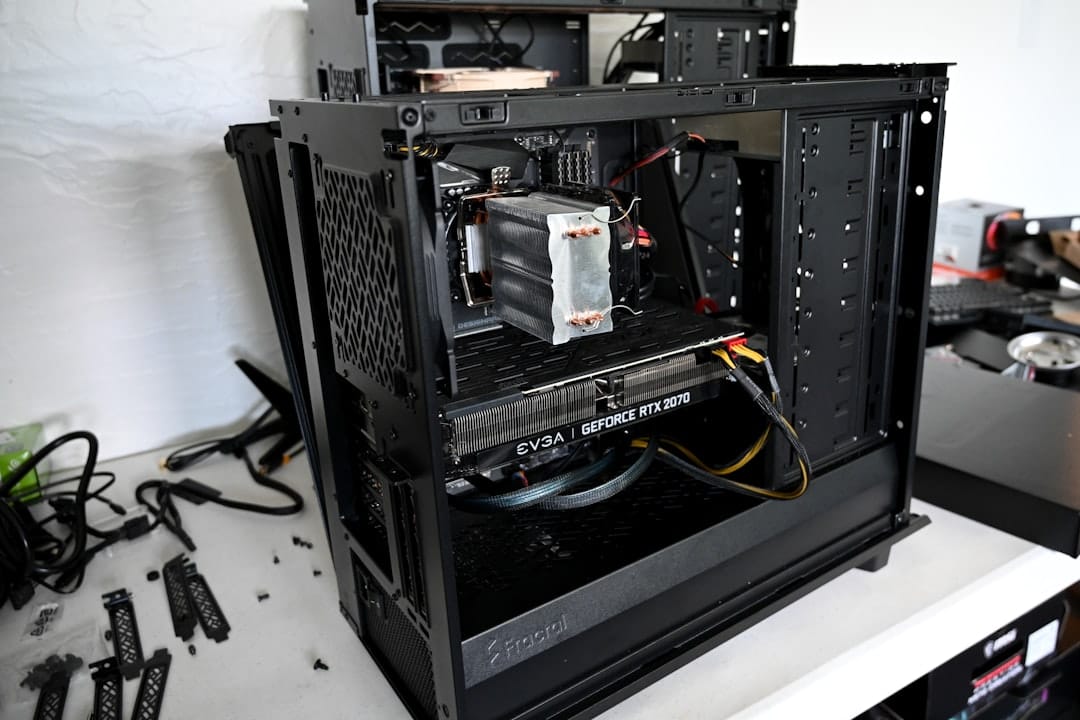
According to StoredBits' SSD power analysis:
- NVMe SSD idle: 0.1-0.6 watts per drive
- NVMe SSD active: 0.5-2.5 watts
- 3.5" HDD idle: 4-6 watts per drive
- 3.5" HDD active: 6-10 watts
A 4-drive all-NVMe array consumes ~2-3 watts total at idle. A 4-drive HDD array? That's 16-24 watts just sitting there.
No Moving Parts = Zero Noise
The obvious benefit: complete silence. No drive spin-up sounds, no seek clicking, no vibration. Combined with a fanless chassis, you get a truly silent home server that can sit on your desk or bookshelf without interrupting your focus.
Community Reports: Real-World All-Flash Builds
The homelab community has embraced all-flash builds. Here are real experiences:
The 44TB SFF Monster
A standout build from r/sffpc showcases what's possible:
"5.6L 44TB SSD NAS/Home Server... 9x Samsung 990 Pro 4TB NVMe & 2x Samsung 870 EVO 4TB SATA... I wanted something that would fit on my bookshelf here and be silent."
Their specs:
- Intel Core Ultra 9 285 (non-k)
- COOJ Sparrow MQ5 chassis (5.6L!)
- HighPoint Rocket 1104 HBA for PCIe bifurcation
- HDPLEX 250W passive GaN PSU
- Ubiquiti 10GbE USB4/TB4 Adapter
- TrueNAS in a Proxmox VM
Beelink ME Mini: Lessons Learned
The Beelink ME Mini offers 6x NVMe slots in a tiny package, but the community discovered thermal issues:
"There is an ongoing problem with the Beelink ME Mini, which makes it almost unusable for those who chose it as a NAS option with 6 high-end SSDs (especially SSDs with DRAM)... 6x 2TB Samsung 990 Pro... [overheating problems]"
Lesson: High-performance NVMe drives (Gen4, DRAM-equipped) generate significant heat when densely packed. Consider DRAM-less or lower-power drives for multi-NVMe enclosures.
Budget-Conscious Build
From r/HomeServer:
"I want to build a 'smaller' NAS machine with at least 4x 4TB NVMe drives for data with one parity (like RAID5) and a separate smaller NVMe for the OS. My priorities are power efficiency, reliability (that it lasts and that it doesn't run hot) and a reasonably small form factor."
This represents the ideal use case: prioritizing efficiency and silence over raw performance.
Understanding PCIe Bifurcation
To connect multiple NVMe drives, you need to understand PCIe bifurcation. A discussion on r/homelab explains:
"I've been looking at those PCIe x16 to 4x M.2 (NVMe) adapter cards, the ones that let you connect 4 NVMe SSDs to a single PCIe slot..."
How it works:
- A PCIe x16 slot can be split (bifurcated) into 4x x4 lanes
- Each x4 lane provides full NVMe bandwidth (~4GB/s for Gen4)
- Motherboard BIOS must support bifurcation modes
Common configurations:
| Bifurcation Mode | Slot Split | Use Case |
|---|---|---|
| x4x4x4x4 | 4 equal x4 slots | 4 NVMe drives |
| x8x8 | 2 equal x8 slots | 2 NVMe or GPU |
| x8x4x4 | Mixed | 1 GPU + 2 NVMe |
Motherboards with bifurcation support:
- ASRock Rack server boards (confirmed)
- Most ASUS/MSI/Gigabyte Z-series boards
- Intel N100/N305 mini-ITX boards (varies)
Recommended Hardware Components
Option 1: Budget Build ($600-900)
Target: 8-16TB usable, <10W idle, silent operation
| Component | Recommendation | Price |
|---|---|---|
| CPU/Board | Intel N100 mini-ITX (ASRock N100DC-ITX) | $150 |
| RAM | 16GB DDR4 SO-DIMM | $40 |
| NVMe Drives | 4x 2TB WD SN7100 (DRAM-less, efficient) | $400 |
| M.2 Adapter | JEYI PCIe x4 to M.2 adapter | $20 |
| Case | Fanless mini-ITX (Streacom FC10) | $150 |
| PSU | HDPlex 100W DC-ATX + AC adapter | $80 |
Total: ~$840 | Usable storage: ~12TB (RAIDZ1) | Idle power: ~8-10W
Option 2: Performance Build ($1,200-1,800)
Target: 16-32TB usable, <15W idle, 10GbE networking
| Component | Recommendation | Price |
|---|---|---|
| CPU/Board | Intel i3-12100 + Z690 mini-ITX | $350 |
| RAM | 32GB DDR5 | $100 |
| NVMe Drives | 4x 4TB Samsung 990 Pro | $1,000 |
| HBA Card | HighPoint Rocket 1104 (4x NVMe) | $100 |
| Case | Fanless (Streacom DA2 with passive) | $200 |
| PSU | Corsair SF450 Platinum | $100 |
| 10GbE | Intel X550-T1 or ASUS XG-C100C | $80 |
Total: ~$1,930 | Usable storage: ~24TB (RAIDZ1) | Idle power: ~12-15W
Option 3: Turnkey Solutions
Several pre-built options exist:
ZimaBoard 2 ($200-300)
- Fanless x86 SBC
- Dual 2.5GbE networking
- PCIe expansion for NVMe
- Great for 2-4 drive setups
QNAP HS-453DX (~$800)
- Completely fanless
- 10GbE + 1GbE networking
- 2x 3.5" + 2x M.2 slots
- Hybrid approach (not pure NVMe)
Topton/CWWK N100 NAS ($300-500)
- Chinese market mini-PCs
- 4-6 NVMe slots
- Intel N100/N150 processor
- Mixed quality/support
ZFS Optimization for All-NVMe
If you're using TrueNAS or Proxmox with ZFS, there are specific optimizations for all-flash pools.
Skip the SLOG and L2ARC
According to Klara Systems' ZFS tuning guide:
"The SLOG is not a write accelerator for all operations. It only affects synchronous writes."
For all-NVMe pools:
- Skip SLOG: Your NVMe drives are already fast enough for ZIL. SLOG only helps HDD pools.
- Skip L2ARC: With fast NVMe as primary storage, L2ARC adds unnecessary overhead and consumes RAM for pointer metadata.
Consider a Metadata Special Vdev
From Proxmox forums:
"If you use a 'special device' (SSD, NVMe, etc.) you can cache ZFS metadata, which can help a lot... Metadata vdev works great if you have many clients using SMB in parallel and potentially large directories."
For mixed HDD+NVMe setups, a metadata special vdev can significantly speed up directory listing and file operations.
Optimal Pool Configuration
# Create RAIDZ1 pool (4 drives, 1 parity)
zpool create tank raidz1 \
  /dev/nvme0n1 /dev/nvme1n1 /dev/nvme2n1 /dev/nvme3n1

# Set optimal recordsize for mixed workloads
zfs set recordsize=128K tank

# Enable compression (LZ4 is CPU-efficient)
zfs set compression=lz4 tank

# Set atime off (reduces writes)
zfs set atime=off tank

# For NVMe, ensure proper ashift
zpool create -o ashift=12 tank raidz1 ...
NVMe-Specific Considerations
From the OpenZFS documentation:
- ashift=12: Most NVMe drives use 4K sectors (2^12 = 4096)
- Disable TRIM in pool: Some NVMe controllers handle TRIM poorly under heavy load
- Monitor wear leveling: Check drive health regularly with
smartctl
Power Optimization Tips
Achieving ultra-low idle power requires attention to detail:
BIOS Settings
According to Matt Gadient's low-power guide:
"Systems will only hit C8 power state if nothing is connected to the CPU-attached PCIE lanes... 'Native ASPM' and appropriate L1 states must be enabled for low power consumption to work."
Critical BIOS settings:
- Enable ASPM L1 for all PCIe devices
- Enable Native ASPM in power management
- Disable unused USB controllers
- Disable RGB/LED controllers
- Set CPU to power-efficient mode
NVMe Power States
NVMe drives support multiple power states:
- PS0: Active (full power)
- PS1-PS4: Idle states (progressively lower power)
- APST: Autonomous Power State Transition
Verify APST is enabled:
nvme get-feature /dev/nvme0 -f 0x0c -H
Measured Results
From Patshead.com's efficiency analysis:
"One builder achieved a 6-bay, 6.2-liter Intel N100 NAS with 16 GB of RAM and a 512 GB NVMe that cost $325, idling at 7.2 watts."
With all-NVMe storage:
- Base system: 5-7W (N100/N305)
- 4x NVMe drives: 0.5-2W
- 10GbE NIC: 2-4W
- Total: 8-13W idle
10GbE Networking Options
To fully utilize NVMe speeds, you'll want 10GbE or faster networking:
Adapter Recommendations
| Adapter | Speed | Price | Notes |
|---|---|---|---|
| Intel X550-T1 | 10GbE | $70-100 | Single RJ45, reliable |
| ASUS XG-C100C | 10GbE | $80-100 | Aquantia chip, good value |
| Mellanox ConnectX-3 | 10GbE SFP+ | $30-50 | Used, requires DAC/optics |
| Ubiquiti USB4/TB4 10GbE | 10GbE | $100 | No PCIe slot needed |
Switch Options
Budget 10GbE switches:
- MikroTik CRS305-1G-4S+IN: ~$150, 4x SFP+ ports
- QNAP QSW-1105-5T: ~$120, 5x 2.5GbE (multi-gig stepping stone)
- TP-Link TL-SX105: ~$80, 5x 10GbE
Troubleshooting Common Issues
Thermal Throttling
Problem: NVMe drives throttle under sustained load
Solutions:
- Add heatsinks to M.2 drives
- Ensure adequate airflow (even passive)
- Consider DRAM-less drives (run cooler)
- Space out drives on bifurcation cards
Bifurcation Not Working
Problem: Only one drive detected on 4x NVMe card
Solutions:
- Verify BIOS bifurcation setting matches card
- Update to latest BIOS
- Try x4x4x4x4 mode explicitly
- Some consumer boards don't support bifurcation
High Idle Power
Problem: System uses more power than expected at idle
Solutions:
- Enable ASPM L1 in BIOS
- Disable unused PCIe slots
- Check NVMe APST status
- Use
powertop --auto-tune
Cost-Benefit Analysis
Is all-flash worth it? Let's compare:
| Factor | 4x 4TB HDD (16TB raw) | 4x 4TB NVMe (16TB raw) |
|---|---|---|
| Drive cost | $400-500 | $1,000-1,200 |
| Idle power | 20-25W | 8-12W |
| Annual power cost | $26-33 (@$0.15/kWh) | $10-16 |
| Noise level | Audible | Silent |
| Read speed | 150-200 MB/s | 2,000-7,000 MB/s |
| IOPS | 100-200 | 100,000-1,000,000 |
| 5-year power savings | Baseline | $80-100 |
| Lifespan | 3-5 years | 5-10 years |
Verdict: If you value silence and performance, the NVMe premium pays for itself through power savings over 5+ years, plus you get dramatically better performance.
Conclusion
Building an all-flash NVMe NAS in 2026 makes more sense than ever. The combination of:
- Affordable 4TB NVMe drives at ~$250-300 each
- Ultra-low power consumption (8-15W total)
- Complete silence with fanless designs
- 10GbE networking for full speed utilization
- ZFS reliability for data protection
...creates a compelling package for anyone tired of noisy, power-hungry traditional NAS systems.
Start with a budget Intel N100 build if you want to test the waters, or go all-in with a premium build that delivers enterprise-class performance in a desktop form factor.
Additional Resources
- TrueNAS Scale Documentation
- OpenZFS Performance Tuning
- r/homelab - Active community for build advice
- r/DataHoarder - Storage-focused discussions
- Level1Techs Forums - Deep technical discussions on ZFS and NVMe
Have questions about your all-flash NAS build? Check out the power calculator to estimate your system's energy usage and compare it to traditional HDD-based alternatives.
You may also like
Builds
Silent Fanless Home Server Build 2026: Living Room Ready
Build a completely silent home server for the living room. Compare truly fanless N100 mini PCs (0 dBA, 6-12W) vs near-silent Noctua builds vs full-featured quiet systems. Full component guide included.
buildsfanlessliving-room

Builds
Silent All-Flash NAS Build: Zero Noise, Maximum Speed
Build a fanless all-SSD NAS for under $500. Jonsbo N2 case, ZFS tuning, and power optimization for silent 24/7 operation.
fanless
Builds
N100 Home Server Docker Stack: Run 10 Services Under 15W (2026)
Complete docker-compose.yml to run Jellyfin, Nextcloud, Home Assistant, Pi-hole, Vaultwarden, Immich, Homepage, Uptime Kuma, Tailscale, and Portainer on an Intel N100 mini PC under 15W.
docker-composehome-assistantlow-power
Related Tools
Ready to calculate your power costs?
Use our Power Calculator to estimate how much your server will cost to run 24/7.
Try Power Calculator