
← Back to Hardware Reviews
Intel N97 vs N100 vs N305: Low Power CPU Showdown (2026)
Compare Intel N97, N100, and N305 for home servers. Benchmarks, power consumption, transcoding tests, and which CPU to buy in 2026.
Published Jan 1, 2026Updated Jan 1, 2026
low-powern100n305n97
Intel N97 vs N100 vs N305: The Ultimate Low Power CPU Showdown (2026)
The Intel N100 has dominated the low-power home server market since 2023, but two siblings are challenging its throne: the N97 with its boosted GPU, and the i3-N305 with double the cores. Which one is right for your home server in 2026?
In this comprehensive comparison, we'll analyze real-world benchmarks, power consumption data, transcoding performance, and community feedback to help you make the right choice for your next build.
Quick Comparison: N97 vs N100 vs N305
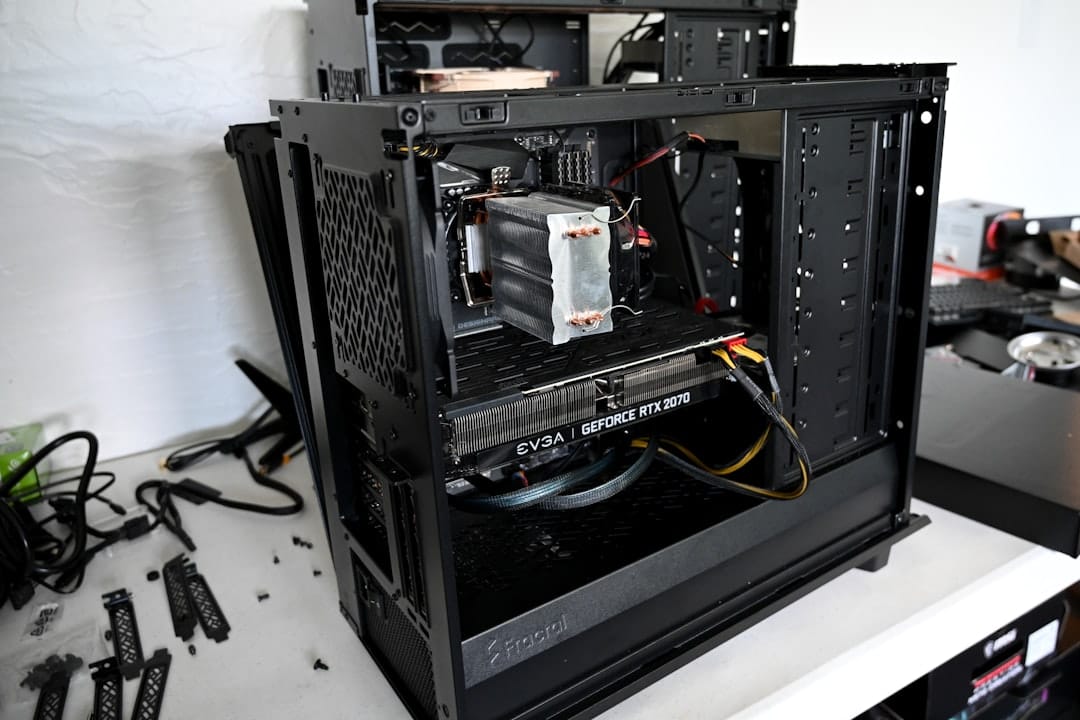
Before diving deep, here's how these three processors stack up:
| Specification | Intel N100 | Intel N97 | Intel i3-N305 |
|---|---|---|---|
| Architecture | Alder Lake-N | Alder Lake-N | Alder Lake-N |
| Cores/Threads | 4C/4T | 4C/4T | 8C/8T |
| Base Clock | 800 MHz | 800 MHz | 900 MHz |
| Max Turbo | 3.4 GHz | 3.6 GHz | 3.8 GHz |
| L3 Cache | 6 MB | 6 MB | 6 MB |
| TDP | 6W | 12W | 15W |
| iGPU | 24 EU @ 750 MHz | 24 EU @ 1.2 GHz | 32 EU @ 1.25 GHz |
| Max Memory | 16 GB DDR4/DDR5 | 16 GB DDR4/DDR5 | 16 GB DDR4/DDR5 |
| AV1 Decode | Yes | Yes | Yes |
| AV1 Encode | No | No | No |
| Typical Price | $150-250 (mini PC) | $180-280 (mini PC) | $250-400 (mini PC) |
Key Insight: All three CPUs use only E-cores (efficiency cores) with no P-cores. The N305 simply has 8 E-cores instead of 4, not a fundamentally different architecture.
Understanding Intel's "N" Series

Intel's Alder Lake-N family represents a significant shift from the old Celeron and Pentium Silver lineup. These processors are purpose-built for:
- Fanless and low-power systems
- Always-on home servers and NAS devices
- Edge computing and IoT applications
- Budget laptops and mini PCs
All three processors share the same Gracemont E-core architecture and Intel UHD Graphics based on Xe-LP. The key differences are in core count, clock speeds, and GPU configuration.
Why E-Cores Only?
Unlike desktop Alder Lake processors with P+E core hybrids, the N-series uses only efficiency cores. This design choice enables:
- Ultra-low idle power (as low as 4-6W for complete systems)
- Passive cooling compatibility (especially N100 at 6W TDP)
- Consistent performance without thermal throttling concerns
- Lower cost for budget-conscious builds
Intel N100: The Reigning Champion
The N100 has earned its reputation as the king of low-power home servers. Here's why:
Specifications Deep-Dive
- 4 E-cores at up to 3.4 GHz - Enough for most home server tasks
- 6W TDP - Enables truly fanless operation
- 24 EU @ 750 MHz iGPU - Hardware transcoding via Quick Sync
- PCIe 3.0 x9 - Sufficient for NVMe and 2.5GbE NICs
Real-World Power Consumption
Based on community measurements:
| Configuration | Idle Power | Load Power |
|---|---|---|
| N100 mini PC (basic) | 4-6W | 15-20W |
| N100 + 2x 2.5GbE NICs | 8-10W | 20-25W |
| N100 + NVMe + SATA SSD | 10-12W | 25-30W |
| N100 + Coral TPU + storage | 11-15W | 30-40W |
"My GMKtec N100 box idles at around 4W running Linux Alpine with some tweaks." - r/selfhosted community member
Best Use Cases for N100
- 24/7 Home Servers - Unbeatable efficiency for always-on operation
- Fanless Builds - 6W TDP enables passive cooling
- Router/Firewall - OPNsense, pfSense with 2.5GbE
- Light Docker Workloads - Pi-hole, Home Assistant, Traefik
- Media Streaming - Jellyfin/Plex with hardware transcoding
Limitations
- Limited multi-threaded performance - Only 4 cores
- Lower GPU clock - 750 MHz vs 1.2 GHz on N97
- Single-channel memory - Bandwidth bottleneck for some workloads
Intel N97: The Hidden Gem
The N97 is often overlooked, but it offers compelling advantages for specific use cases.
Why N97 Over N100?
- 60% Faster GPU - 24 EU @ 1.2 GHz vs 24 EU @ 750 MHz
- Higher Turbo Clock - 3.6 GHz vs 3.4 GHz
- Better 3D Graphics - For light gaming/emulation
"The real winner in terms of price/performance ratio is the Processor N97 with good CPU performance and better 3D graphics." - CNX Software
Benchmark Comparison: N97 vs N100
| Benchmark | N100 | N97 | Difference |
|---|---|---|---|
| PassMark (CPU) | ~5,584 | ~6,100 | +10% |
| Single-Thread | ~2,100 | ~2,270 | +8% |
| 3DMark (GPU) | Baseline | +44% | Significant |
Power Consumption Trade-off
The N97's 12W TDP is double the N100's 6W. In practice:
- Idle difference is minimal - Both systems idle around 8-12W with peripherals
- Load difference is noticeable - N97 pulls 5-10W more under sustained load
- Yearly cost impact - At $0.15/kWh, 5W difference = ~$6.50/year
Best Use Cases for N97
- Retro Gaming/Emulation - PS1, N64, some PS2 games
- Light Content Creation - Video encoding, image processing
- Active-Cooled Builds - Where 12W TDP isn't a concern
- Multi-Tab Browsing - Thin client applications
Who Should Choose N97?
Choose the N97 if you:
- Need better GPU performance for transcoding or light gaming
- Have active cooling available
- Can find it at a similar price to the N100
- Value the 8-10% CPU performance boost
Intel i3-N305: The 8-Core Powerhouse
When 4 cores aren't enough, the N305 doubles your thread count while maintaining excellent efficiency.
Key Advantages
- 8 cores / 8 threads - 2x the parallel processing
- 3.8 GHz max turbo - Highest in the N-series
- 32 EU @ 1.25 GHz iGPU - Best GPU of the three
- 15W TDP - Still very efficient for 8 cores
Performance Analysis
| Workload | N100 | N305 | Improvement |
|---|---|---|---|
| Multi-threaded tasks | Baseline | +70-100% | Massive |
| Compilation/builds | Baseline | +80% | Significant |
| VM density | 2-3 VMs | 4-6 VMs | Double |
| Docker containers | 10-15 | 20-30+ | Double |
"The N100 wasn't powerful enough for my NAS needs, but the N305 has been perfect and never goes above 65% usage." - NAS Compares community
Real-World Power Consumption
From CWWK i3-N305 benchmarks:
| State | Power Draw |
|---|---|
| Idle (Proxmox, no VMs) | 13.5W |
| Moderate load | 20-25W |
| 7-Zip benchmark (sustained) | 34W |
| Peak (initial burst) | 50W |
Motherboard Options for N305
Several vendors offer N305 NAS motherboards:
| Brand | Model | Features | Price |
|---|---|---|---|
| CWWK | N305 NAS | 6x SATA, 2x M.2, 4x 2.5GbE | ~$200 |
| Topton | MW-N305-NAS | 6x SATA, 10GbE + 2x 2.5GbE | ~$180 |
| Kingnovy | N305 ITX | Similar to Topton | ~$160 |
Best Use Cases for N305
- Proxmox/Virtualization - Run 4-6 VMs comfortably
- Heavy Docker Workloads - 20+ containers
- Multi-Stream Transcoding - 3-4 simultaneous Plex/Jellyfin streams
- Home Lab Clusters - More headroom for experimentation
- ZFS with Compression - CPU overhead handled easily
Limitations
- 15W TDP - May require active cooling
- Higher cost - $50-150 more than N100 systems
- Overkill for simple tasks - Pi-hole doesn't need 8 cores
- No AV1 hardware encoding - Same limitation as N100/N97
Transcoding Performance: Quick Sync Showdown
All three processors support Intel Quick Sync Video for hardware-accelerated transcoding. Here's what you need to know:
Codec Support
| Codec | Decode | Encode |
|---|---|---|
| H.264/AVC | Yes (all) | Yes (all) |
| H.265/HEVC | Yes (all) | Yes (all) |
| VP9 | Yes (all) | Yes (all) |
| AV1 | Yes (all) | No |
Important: None of these processors can hardware encode AV1. For AV1 encoding, you need Intel Arc GPUs or Meteor Lake (Core Ultra) processors.
Jellyfin/Plex Transcoding
For media server usage:
| Scenario | N100 | N97 | N305 |
|---|---|---|---|
| 1x 4K HEVC → 1080p | Smooth | Smooth | Smooth |
| 2x 4K HEVC → 1080p | Possible | Comfortable | Easy |
| 3x 4K HEVC → 1080p | Struggles | Possible | Comfortable |
| 4K HDR tone mapping | Works | Works | Works |
"In case you're wondering if an Intel N100 mini PC can handle Frigate and 7 wired cameras... I am running Frigate, Jellyfin, Immich, Audiobookshelf, Home Assistant and other programs. The N100 is handling it like a G." - r/selfhosted
Software Configuration
For optimal transcoding on all three processors:
# Check Quick Sync availability
ls -la /dev/dri/

# Jellyfin: Enable VAAPI hardware acceleration
# Settings → Playback → Transcoding → Hardware acceleration = VAAPI

# Verify driver version (6.2+ kernel recommended)
uname -r
Head-to-Head: Which Should You Choose?
Decision Matrix
| Your Priority | Winner | Why |
|---|---|---|
| Lowest Power | N100 | 6W TDP, fanless capable |
| Best Value | N100 | Cheapest, most available |
| GPU Performance | N97 | 60% faster iGPU |
| Multi-threading | N305 | 8 cores vs 4 |
| VM Density | N305 | Double the cores |
| Fanless Operation | N100 | Only 6W TDP option |
| Future Proofing | N305 | More headroom |
| Media Transcoding | Any | All have Quick Sync |
Use Case Recommendations
Best for Media Servers (Plex/Jellyfin)
Winner: N100 for most users
- Quick Sync handles transcoding on all three
- 6W TDP means silent 24/7 operation
- Cost savings can go toward storage
Choose N305 if: You need 4+ simultaneous transcodes or run additional heavy services.
Best for Virtualization (Proxmox/ESXi)
Winner: N305
- 8 cores allow 4-6 comfortable VMs
- Higher memory bandwidth for VMs
- Better scheduling with more threads
Choose N100 if: You only need 2-3 light VMs.
Best for Router/Firewall
Winner: N100
- Routing doesn't need 8 cores
- Lowest power for 24/7 operation
- Many 4-port 2.5GbE options available
Best for NAS
Winner: Depends on workload
- Light NAS (file storage): N100
- Heavy NAS (ZFS, Frigate, Immich): N305
- Light NAS + casual gaming: N97
Best for Home Automation
Winner: N100
- Home Assistant is lightweight
- Zigbee2MQTT, Node-RED minimal overhead
- Save money for sensors and devices
Hardware Recommendations
Top N100 Mini PCs (2026)
| Model | RAM | Storage | Price |
|---|---|---|---|
| Beelink EQ12 | 16GB DDR5 | 500GB NVMe | ~$200 |
| GMKtec NucBox G3 | 16GB DDR4 | 512GB NVMe | ~$180 |
| CWWK N100 (4x 2.5GbE) | 16GB DDR5 | 256GB NVMe | ~$220 |
Top N97 Mini PCs (2026)
| Model | RAM | Storage | Price |
|---|---|---|---|
| ODROID-H4 | 8GB DDR5 | None | ~$130 (board) |
| Beelink EQ13 | 16GB DDR5 | 500GB NVMe | ~$250 |
| GMKtec NucBox G2 | 16GB DDR4 | 512GB NVMe | ~$220 |
Top N305 Systems (2026)
| Model | RAM | Storage | Price |
|---|---|---|---|
| Topton N305 NAS board | Up to 64GB | 6x SATA + 2x M.2 | ~$180 |
| CWWK N305 NAS board | Up to 64GB | 6x SATA + 2x M.2 | ~$200 |
| Beelink SER5 N305 | 16GB DDR5 | 500GB NVMe | ~$350 |
Cost Analysis: 1-Year TCO
Assuming 24/7 operation at $0.15/kWh:
| Component | N100 System | N97 System | N305 System |
|---|---|---|---|
| Hardware | $200 | $250 | $350 |
| Avg. Power (idle+light) | 8W | 10W | 14W |
| Annual Electricity | $10.50 | $13.15 | $18.40 |
| 1-Year TCO | $210.50 | $263.15 | $368.40 |
| 3-Year TCO | $231.50 | $289.45 | $405.20 |
The N100 saves approximately $50-150 over 3 years in electricity alone compared to the N305.
Common Issues and Solutions
Thermal Throttling (N305)
Problem: N305 running hot in mini PC enclosure
Solution:
# In BIOS, adjust power limits:
CPU PL1: 15W (from default 20W)
Platform PL1: 15W
Quick Sync Not Working
Problem: Jellyfin/Plex not using hardware transcoding
Solution:
# Ensure /dev/dri is available
ls -la /dev/dri/renderD128

# For Docker, add device mapping:
# --device=/dev/dri:/dev/dri

# Check kernel version (6.2+ recommended)
uname -r
High Idle Power
Problem: System idling at 15W+ instead of expected 6-8W
Solutions:
- Enable C-states in BIOS
- Disable unused USB ports
- Use efficient storage (NVMe > HDD)
- Check for background processes
Community Feedback
Here's what the home server community says about these processors:
"A mini-PC + attached storage is the most adequate home server solution for most users. I genuinely believe that a mini pc and some form of attached storage constitute for most users the most adequate home server solution." - r/selfhosted (1026 upvotes)
"Future-proofing a Proxmox server: How long will the N100 last? My main concern is choosing a CPU that will last a good while." - r/HomeServer discussion
"Should I buy this N100 mini router/pc? Is it enough for my personal usage?" - r/homelab (525 upvotes)
Conclusion: Making Your Choice
After analyzing specifications, benchmarks, power consumption, and community feedback, here are our recommendations:
Choose the Intel N100 if:
- Power efficiency is your top priority
- You want fanless/silent operation
- Your workload is light to moderate
- Budget is a primary concern
- You're building a router, Pi-hole, or light NAS
Choose the Intel N97 if:
- You need better GPU performance
- Light gaming/emulation is important
- Active cooling is available
- Price is similar to N100 in your region
Choose the Intel i3-N305 if:
- You run many VMs or containers
- Multi-threaded performance matters
- You want future-proofing headroom
- Heavy workloads (ZFS, Frigate, multiple transcodes)
- Budget allows the premium
The Bottom Line: For most home server users, the Intel N100 remains the best choice in 2026. It offers the best balance of performance, power efficiency, and value. Only upgrade to the N305 if you genuinely need 8 cores—and most home users don't.
Additional Resources
Internal Links
- Intel N100 vs N305: Which is Better for Home Servers?
- Best Mini PCs for Low Power Homelabs (2025)
- How to Measure Your Home Server's Idle Power
- Low Power Plex Media Server Setup
External References
You may also like
Hardware
Best Home Server for Beginners 2026: Complete Starter Guide
New to home servers? Start here. Compare hardware options, discover 8 popular use cases, and learn how to run 10 self-hosted services on an Intel N100 mini PC for just $10/year in electricity.
beginnersgetting-startedlow-power

Builds
Silent Fanless Home Server Build 2026: Living Room Ready
Build a completely silent home server for the living room. Compare truly fanless N100 mini PCs (0 dBA, 6-12W) vs near-silent Noctua builds vs full-featured quiet systems. Full component guide included.
buildsfanlessliving-room
Builds
N100 Home Server Docker Stack: Run 10 Services Under 15W (2026)
Complete docker-compose.yml to run Jellyfin, Nextcloud, Home Assistant, Pi-hole, Vaultwarden, Immich, Homepage, Uptime Kuma, Tailscale, and Portainer on an Intel N100 mini PC under 15W.
docker-composehome-assistantlow-power
Related Tools
Ready to build your server?
Check out our build guides for step-by-step instructions.
View Build Guides