
← Back to Use Cases
Private AI Automation with n8n: Local LLM Workflows
Build a private AI automation pipeline with n8n and Ollama. Self-hosted workflows for RSS summarization, email processing, and smart home automation.
Published Jan 1, 2026Updated Jan 1, 2026
n8nself-hosted
Private AI Automation with n8n: Building Local LLM Workflows (2026)
Every time you send a prompt to ChatGPT, you're paying per token and sharing your data with OpenAI. For home server enthusiasts who value privacy and want unlimited AI usage, there's a better way: run your own AI automation pipeline with n8n and Ollama.
This guide shows you how to build a completely self-hosted AI automation stack that costs nothing per inference, keeps your data local, and integrates with hundreds of services.
Why Self-Hosted AI Automation?
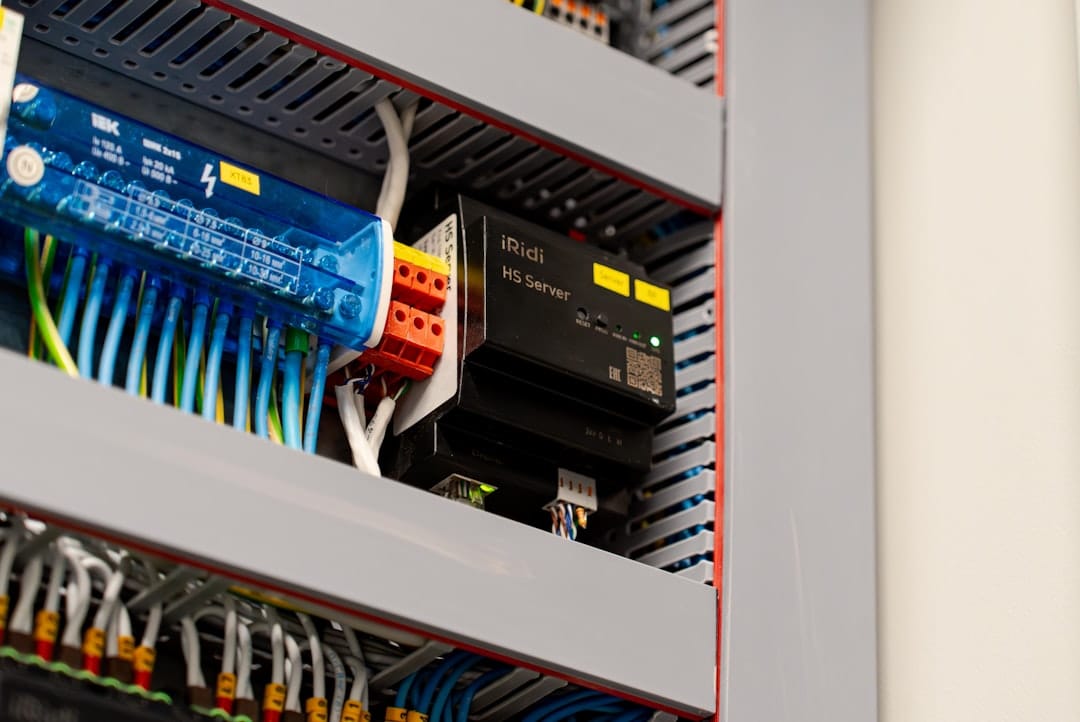
The community is moving toward local AI stacks. As one user on r/n8n put it:
"We've all hit that point: You build an incredible AI agent in n8n, but then you look at your OpenAI bill or worry about sending sensitive client data to the cloud. The 'pay-per-token' model is a tax on your curiosity and scale."
Benefits of Going Local

| Factor | Cloud AI (OpenAI/Claude) | Self-Hosted (Ollama + n8n) |
|---|---|---|
| Cost | $0.002-0.06 per 1K tokens | $0 after hardware |
| Privacy | Data sent to third party | Everything stays local |
| Rate Limits | API throttling | Unlimited |
| Uptime | Dependent on provider | You control |
| Latency | Network round-trip | Local inference |
| Model Choice | What provider offers | Any open-source model |
According to n8n's local LLM guide, local LLMs offer a cost-effective and secure alternative to cloud-based options. By running models on your own hardware, you can avoid recurring API costs and keep sensitive data within your own infrastructure.
The Core Stack: n8n + Ollama + Vector DB
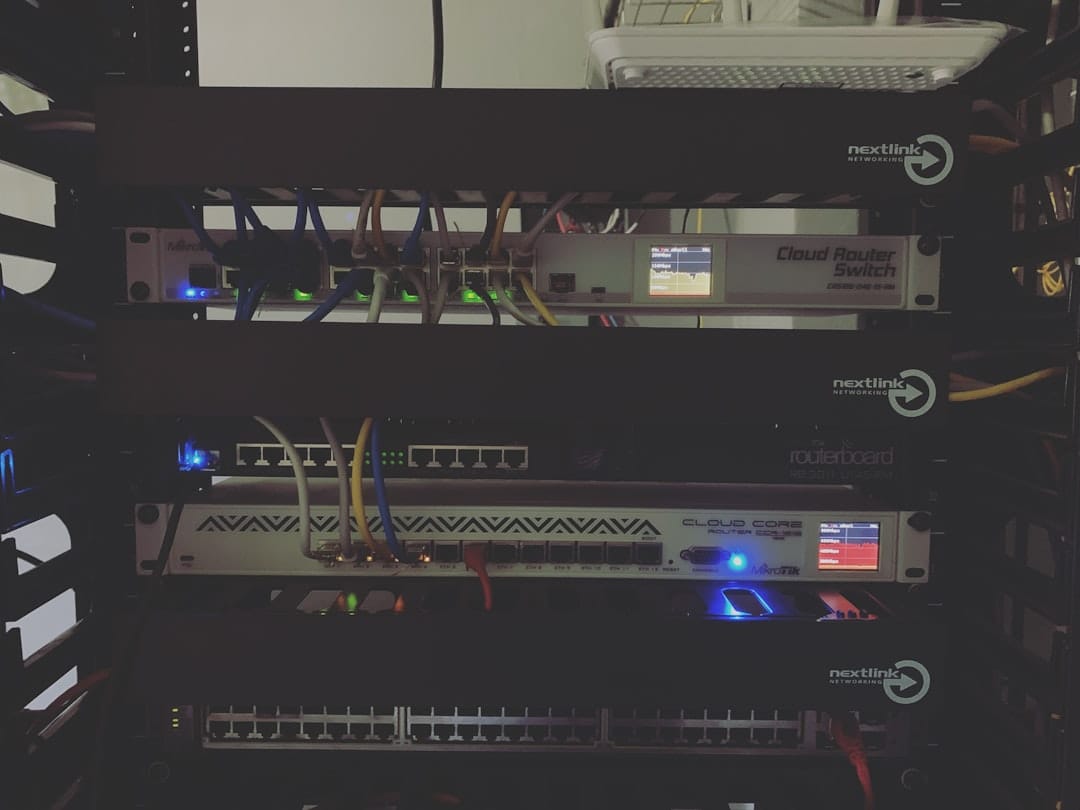
The "Holy Trinity" of self-hosted AI automation consists of three components:
1. n8n - The Workflow Orchestrator
n8n is a fair-code workflow automation platform with 400+ integrations and native AI capabilities. Think Zapier, but self-hosted and infinitely more powerful.
Why n8n over alternatives:
- Visual workflow builder (low-code)
- Self-hostable with Docker
- Native AI agent nodes
- LangChain integration for complex AI chains
- Active community with thousands of templates
2. Ollama - The Local LLM Runtime
Ollama makes running open-source LLMs dead simple. One command to install, one command to run any model.
Supported models include:
- Llama 3.x (Meta's latest)
- Mistral/Mixtral
- DeepSeek
- Phi-3
- CodeLlama
- And many more
3. Vector Database (Optional but Powerful)
For RAG (Retrieval-Augmented Generation) workflows, add a vector database:
- Qdrant: Fast, open-source, great Docker support
- Supabase: Postgres with pgvector, also handles auth
- Chroma: Python-native, easy to start
Setting Up Your Self-Hosted AI Stack
Method 1: n8n Self-Hosted AI Starter Kit (Easiest)
The n8n Self-Hosted AI Starter Kit bundles everything you need:
# Clone the starter kit
git clone https://github.com/n8n-io/self-hosted-ai-starter-kit.git
cd self-hosted-ai-starter-kit

# Start everything with Docker Compose
docker-compose up -d
This gives you:
- n8n with AI nodes pre-configured
- Ollama with models ready to use
- Qdrant vector database
- Postgres for data persistence
- Workflow templates to get started
Method 2: Manual Docker Setup
For more control, set up each component individually:
# docker-compose.yml
version: '3.8'

services:
  n8n:
    image: n8nio/n8n:latest
    ports:
      - "5678:5678"
    environment:
      - N8N_BASIC_AUTH_ACTIVE=true
      - N8N_BASIC_AUTH_USER=admin
      - N8N_BASIC_AUTH_PASSWORD=your-secure-password
      - N8N_HOST=localhost
      - N8N_PORT=5678
      - GENERIC_TIMEZONE=America/Los_Angeles
    volumes:
      - n8n_data:/home/node/.n8n
    depends_on:
      - ollama

  ollama:
    image: ollama/ollama:latest
    ports:
      - "11434:11434"
    volumes:
      - ollama_data:/root/.ollama
    deploy:
      resources:
        reservations:
          devices:
            - driver: nvidia
              count: all
              capabilities: [gpu]

  qdrant:
    image: qdrant/qdrant:latest
    ports:
      - "6333:6333"
    volumes:
      - qdrant_data:/qdrant/storage

volumes:
  n8n_data:
  ollama_data:
  qdrant_data:
# Start the stack
docker-compose up -d

# Pull a model to Ollama
docker exec -it ollama ollama pull llama3.2

# Verify Ollama is running
curl http://localhost:11434/api/tags
Connecting n8n to Ollama
According to Hostinger's integration guide:
"Since both the n8n instance and the Ollama instance are running as containers, the communication between them needs to happen through the Docker network. You can select
http://ollama:11434as the Ollama base URL."
In n8n:
- Create a new workflow
- Add an "Ollama Chat Model" node
- Configure the base URL:
http://ollama:11434(Docker) orhttp://localhost:11434(same machine) - Select your model (e.g.,
llama3.2) - Connect to trigger and action nodes
Practical Workflow Examples
Example 1: AI Email Triage System
Automatically classify and summarize incoming emails using a proven n8n template:
Workflow:
- Trigger: Gmail node watches for new emails
- AI Agent: Classifies email (Important/Ignore/Delegate/Reply Later)
- LLM: Generates summary
- Action: Stores in Notion database with tags
Local implementation:
- Replace GPT-4o with Ollama (Llama 3.2 or Mistral)
- Categories are customizable
- Works for high-volume inboxes
Who benefits:
- Busy professionals managing email overload
- Executives needing quick email triage
- Remote teams requiring visibility into communications
Example 2: RSS News Summarizer
Turn your favorite RSS feeds into a daily AI-curated digest using the RSS + AI template:
Workflow:
- Trigger: Schedule (daily at 8 AM)
- RSS Feed: Fetch latest articles from multiple sources
- Filter: Remove duplicates and low-quality content
- AI Summary: Condense each article to key points
- Output: Send to Discord/Slack/Email
Benefits:
- Reduce noise from multiple news sources
- Get personalized tech briefings
- Archive summaries for later reference
Example 3: Document Q&A with RAG
Build a knowledge base assistant that answers questions from your own documents:
Workflow components:
- Document ingestion: Upload PDFs/docs to vector database
- Query interface: Webhook or chat trigger
- RAG pipeline: Retrieve relevant chunks, send to LLM
- Response: Context-aware answers from your data
According to n8n's workflow templates:
"Documents from Google Drive are downloaded, processed into embeddings, and stored in the vector store for retrieval."
Example 4: Home Assistant Integration
The r/homeassistant community discovered n8n's potential for smart home AI:
"After playing with N8N for a few days, I realized how cool it would be to use it with Assist in Home Assistant..."
Use cases:
- Natural language commands for Home Assistant
- AI-powered automation suggestions based on usage patterns
- Voice assistant that understands complex requests
Hardware Requirements
Minimum (CPU-only inference)
- CPU: Any modern x86_64 or ARM64 processor
- RAM: 8GB (16GB recommended)
- Storage: 20GB for models + workflow data
- Models: 7B parameter models (Llama 3.2:8b, Mistral 7B)
As noted on r/LocalLLaMA:
"A 7B parameter model runs reasonably on consumer CPUs. Larger models benefit from GPUs but don't strictly require them."
Recommended (GPU-accelerated)
- GPU: NVIDIA RTX 3060 or better (12GB+ VRAM)
- RAM: 32GB
- Storage: NVMe SSD, 100GB+
- Models: 13B-70B parameter models
Power Consumption Estimates
| Setup | Idle | Inference Load |
|---|---|---|
| Intel N100 (CPU-only) | 6-10W | 15-25W |
| Ryzen 5600G (iGPU) | 25-35W | 65-95W |
| RTX 3060 system | 45-60W | 180-220W |
| RTX 4090 system | 80-100W | 400-500W |
For 24/7 operation with occasional AI tasks, an N100-based system with a 7B model offers excellent efficiency.
Community Stack Examples
The "AI Tax-Free" Stack
From r/n8n:
"The secret weapon? Coolify. If you aren't using Coolify yet, it's basically a self-hosted Vercel/Heroku. Here is the 'Holy Trinity' stack I'm running: Ollama (on Coolify), n8n, and Supabase. The Cost: $0.00 per token."
Their recommendations:
- VPS with 16GB+ RAM
- Llama 3 or Mistral for general tasks
- Supabase for vector storage and auth
- Same internal network for blazing fast inference
The AI LaunchKit
One community member built AI LaunchKit with 50+ pre-configured tools:
"I got tired of manually setting up n8n + all the AI tools I need, so I packaged everything into one installer... n8n pre-configured with 50+ AI and automation tools that integrate seamlessly."
Included tools:
- Ollama for local inference
- ComfyUI for image generation
- Whisper for speech-to-text
- Vector databases (Qdrant, Chroma)
- 300+ pre-configured workflow templates
Clara: Modular AI Workspace
The Clara project combines everything into a unified interface:
"Imagine building your own workspace for AI — with local tools, agents, automations, and image generation... fully offline, fully modular."
Features:
- Dashboard with customizable widgets
- Chat with local LLMs (RAG, image, document support)
- Native n8n integration (1000+ free templates)
- Stable Diffusion for image generation
Advanced Patterns: AI Agents
n8n supports sophisticated AI agent workflows that go beyond simple prompts:
Agent Types
- Single Agent with State: Maintains context throughout workflow execution
- Chained Requests: Sequential LLM calls building on each other
- Multi-Agent with Gatekeeper: Central coordinator delegating to specialists
- Multi-Agent Teams: Collaborative decision-making for complex tasks
Building Your First Agent
According to n8n's beginner guide:
- Start with "When chat message received" trigger
- Add an AI Agent node
- Configure with Ollama Chat Model
- Add tools (web search, database queries, API calls)
- Enable memory for context persistence
- Connect output to action nodes
Practical agent examples from n8n's blog:
- Customer support agent with knowledge base
- Code review assistant
- Research agent that searches and summarizes
- Data analysis agent for spreadsheets
- Meeting scheduler with calendar integration
Troubleshooting Common Issues
Slow Inference
Problem: AI responses take 30+ seconds
Solutions:
- Use smaller models (7B vs 13B)
- Reduce context length in prompts
- Add GPU acceleration
- Increase Ollama memory allocation:
export OLLAMA_MAX_LOADED_MODELS=1
export OLLAMA_NUM_PARALLEL=1
Memory Errors
Problem: Ollama crashes with OOM
Solutions:
- Use quantized models (Q4_K_M variants)
- Limit context window size
- Add swap space (temporary fix)
- Upgrade RAM or use smaller models
Docker Networking
Problem: n8n can't reach Ollama
Solutions:
- Use Docker service name:
http://ollama:11434 - Or host networking:
http://host.docker.internal:11434 - Check both containers are on same Docker network
- Verify Ollama is binding to 0.0.0.0:11434
Workflow Timeouts
Problem: Complex workflows time out
Solutions:
- Break into smaller sub-workflows
- Use webhook-based async patterns
- Increase n8n timeout settings
- Consider queue mode for heavy workloads
Security Considerations
Running a self-hosted AI stack requires attention to security:
Access Control
- Enable n8n basic auth (minimum)
- Use reverse proxy with HTTPS (Caddy, Traefik, Nginx)
- Implement proper authentication for external access
- Consider VPN for remote access
Data Protection
- All data stays on your hardware (primary benefit)
- Encrypt sensitive workflow data at rest
- Regular backups of n8n data and Ollama models
- Audit workflow access logs
Network Isolation
- Keep AI services on internal network only
- Use Cloudflare Tunnel for secure external access
- Firewall rules to limit exposure
- Don't expose Ollama directly to internet
Cost-Benefit Analysis
Hardware Investment
| Setup | Initial Cost | Monthly Power |
|---|---|---|
| Intel N100 mini PC | $150-200 | $2-4 |
| Used workstation + GPU | $400-600 | $10-20 |
| Dedicated ML server | $1,000-2,000 | $20-40 |
API Savings
At $0.002/1K tokens (GPT-4o-mini pricing):
| Monthly Tokens | Cloud Cost | Self-Hosted |
|---|---|---|
| 1M tokens | $2 | $0 |
| 10M tokens | $20 | $0 |
| 100M tokens | $200 | $0 |
| 1B tokens | $2,000 | $0 |
Break-even point:
- Moderate usage (10M tokens/month): ~2-3 months
- Heavy usage (100M+ tokens/month): <1 month
Conclusion
Building a private AI automation pipeline with n8n and Ollama gives you:
- Zero marginal cost per AI inference
- Complete data privacy - nothing leaves your network
- Unlimited experimentation - iterate without watching your bill
- Integration flexibility - 400+ services connect to n8n
- Full control - choose your models, tune your prompts, own your stack
The self-hosted AI movement is growing rapidly, with communities on r/LocalLLaMA, r/n8n, and r/selfhosted sharing configurations, templates, and troubleshooting tips daily.
Start with the n8n Self-Hosted AI Starter Kit, pull a 7B model, and build your first email summarizer. From there, the only limit is your imagination.
Additional Resources
- n8n Official Documentation
- Ollama Model Library
- n8n Self-Hosted AI Starter Kit
- n8n Workflow Templates
- r/LocalLLaMA - Local LLM community
- r/n8n - n8n community discussions
Already running Ollama for AI inference? Check out our guide on Self-Hosted AI with Ollama and Open WebUI for a complementary chat interface.
You may also like
Use Cases
Nextcloud Self-Hosted Setup Guide 2026: Docker Compose on an N100 Mini PC
Complete Nextcloud setup guide with Docker Compose for 2026. Replace Google Drive with a self-hosted cloud on an Intel N100 mini PC. Includes Redis caching, MariaDB, and remote access via Tailscale.
cloud-storagedocker-composegoogle-drive-alternative

Use Cases
Best Home Server Dashboards 2026: Homepage vs Homarr vs Dashy
Compare the best home server dashboards in 2026: Homepage, Homarr, and Dashy. Resource usage on Intel N100, Docker setup, and which dashboard to choose for your homelab.
dashyhomarrhomepage
Use Cases
Home Assistant on Low-Power Hardware: N100 Mini PC Guide (2026)
Best hardware for Home Assistant in 2026. Run HA on an Intel N100 mini PC at 8-12W idle. Covers HA OS bare metal, Proxmox LXC, and Docker Compose installation methods.
home-assistanthome-automationlow-power
Related Tools
Ready to set up your server?
Check out our build guides to get started with hardware.
View Build Guides