
← Back to Hardware Reviews
Dell Optiplex Micro as Home Server: The $50 Powerhouse (2026)
A used Dell Optiplex 3080 Micro costs $55–$80 on eBay and outperforms many new mini PCs for home server workloads. Real power measurements, storage options, and complete Ubuntu 24.04 setup guide.
Published Mar 6, 2026Updated Mar 6, 2026
dell-optiplexlow-powerrefurbishedubuntuused-hardware
Dell Optiplex Micro as Home Server: The $50 Powerhouse (2026)
The best home server hardware isn't always the newest. For many workloads, a used Dell Optiplex Micro — available for $40–$80 on eBay — outperforms purpose-built mini PCs costing five times as much, while drawing just 8–15W at idle.
This guide covers why the Optiplex Micro is the community's favorite budget home server, which models to buy, what to avoid, and how to configure one for common self-hosted workloads.
Why the Dell Optiplex Micro?
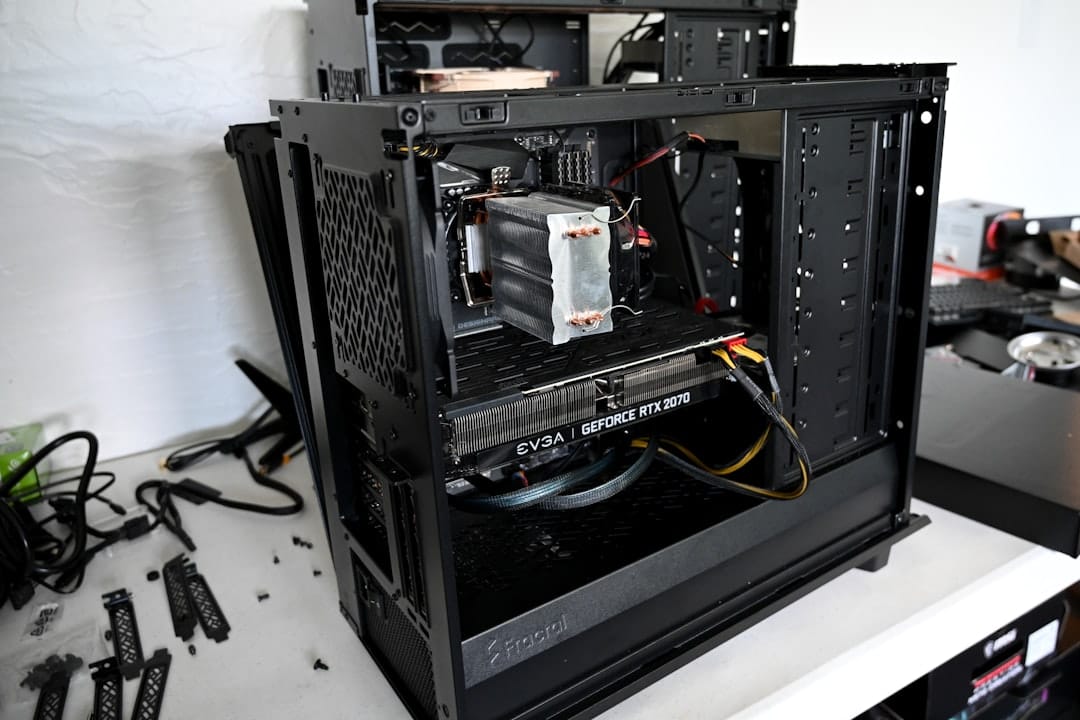
Three reasons dominate every r/homelab and r/selfhosted thread about budget servers:
1. Price-to-performance ratio A Dell Optiplex 3080 Micro with an i5-10500T (6 cores, 12 threads), 16GB DDR4, and a 256GB SSD costs $55–$90 refurbished. A new Intel N100 mini PC with 16GB costs $175–$220. The used Optiplex often wins on multi-threaded workloads.
2. Enterprise build quality These machines were built for 5+ year commercial deployments. 99.9% uptime specs, quality capacitors, and Dell's legendary parts availability mean your $60 server will likely outlast the $200 consumer mini PC.
3. Community support The Optiplex ecosystem is enormous. Every problem you'll encounter has a Reddit thread, a YouTube video, and a solution already documented.
Which Model to Buy: Generation Guide
| Model | CPU Options | TDP | Max RAM | Notes |
|---|---|---|---|---|
| Optiplex 3060/5060/7060 Micro | i3-8100T, i5-8500T, i7-8700T | 35W TDP | 64GB DDR4 | 8th gen Intel, excellent value |
| Optiplex 3070/5070/7070 Micro | i3-9100T, i5-9500T, i7-9700T | 35W TDP | 64GB DDR4 | 9th gen, similar to 3060 |
| Optiplex 3080/5080/7080 Micro | i5-10500T, i7-10700T | 35W TDP | 64GB DDR4 | Best value — 10th gen, PCIe NVMe |
| Optiplex 3090/5090 Micro | i5-11500T, i7-11700T | 35W TDP | 64GB DDR4 | 11th gen, PCIe Gen 4, Intel QSV Gen 12 |
| Optiplex 7010 Micro | i5-13500T, i7-13700T | 35W TDP | 64GB DDR5 | 13th gen, best transcoding |
Recommended: Optiplex 3080 Micro (~$55–$80)
The sweet spot for 2026. The i5-10500T gives you:
- 6 cores / 12 threads (overkill for most home server tasks)
- Intel UHD 630 GPU with hardware video transcoding (H.264, H.265, VP9, AV1 on Gen 12+)
- M.2 PCIe NVMe slot (fast OS drive)
- 2.5" SATA bay (add a large data drive)
- USB 3.1 Gen 2 Type-C port
- DisplayPort + HDMI output
eBay search terms: "Dell Optiplex 3080 Micro i5" — expect 15–30 listings, $50–$90 depending on RAM/storage included.
Avoid: Optiplex 3050 Micro and older
- 7th gen and older use SATA M.2 (slower than NVMe)
- No Intel Quick Sync Gen 9+ (poor 4K HEVC transcoding)
- BIOS limits on newer Linux kernels (rare but documented)
- $5–$15 cheaper — not worth the tradeoffs
Power Consumption: Real Measurements
Community measurements from r/homelab (i5-10500T, 16GB DDR4, 256GB NVMe):
| State | Power Draw |
|---|---|
| Powered off (but plugged in) | 1.2W |
| S3 sleep | 1.8W |
| Idle, Ubuntu 24.04 | 8.5W |
| Idle, 10 Docker containers | 10.5W |
| Plex/Jellyfin hardware transcoding 1080p | 18–25W |
| Plex/Jellyfin 4K hardware transcoding | 15–20W |
| Light compilation (background task) | 28–35W |
| Full load | 45–55W |
The i5-10500T's T-series designation means it's tuned for efficiency — these chips were meant for thin corporate workstations, not gaming rigs.
Annual cost at $0.12/kWh:
- 10.5W idle × 8,760 hrs = $11.05/year
Compare: a 100W desktop server costs $105/year. The Optiplex saves ~$94/year in electricity alone.
Storage Options
The 3080 Micro has two storage slots:
- M.2 2230/2280 PCIe NVMe — OS and Docker volumes
- 2.5" SATA bay — data storage (photos, media, backups)
Recommended storage config for home server:
Budget (~$90 total):
- OS: 256GB NVMe (often included, or add a $20 Crucial P3)
- Data: 2TB Seagate BarraCuda 2.5" SATA ($55–$65)
Enthusiast (~$150 total):
- OS: 1TB Samsung 980 NVMe ($70)
- Data: 4TB Seagate Slim 2.5" SATA ($85) or external USB 3.0 drive
NAS use case: Add a USB 3.0 hub with external drives, or use the Optiplex as a hypervisor and add storage via NFS share from a separate NAS.
What It Can Run
The i5-10500T is significantly faster than the Intel N100 on multi-threaded workloads:
| Workload | N100 | i5-10500T | Winner |
|---|---|---|---|
| Jellyfin 1080p hardware transcode | ✅ 8–12W | ✅ 12–18W | N100 (power) |
| Jellyfin 4K software transcode | ❌ Struggles | ✅ 25–30W | Optiplex |
| Nextcloud + multiple users | Adequate | ✅ Fast | Optiplex |
| Immich face recognition | ✅ 20–28W | ✅ 18–25W | Tie |
| Plex simultaneous streams (3+) | 2 streams max | ✅ 5+ streams | Optiplex |
| Proxmox with 5+ VMs | 2–3 VMs | ✅ 8–10 VMs | Optiplex |
| Arr stack (Sonarr/Radarr) | ✅ Fine | ✅ Fine | Tie |
| Pi-hole | ✅ Fine | ✅ Fine (overkill) | N100 |
| Idle power draw | 6–8W | 8–12W | N100 |
Bottom line: For media servers with multiple concurrent streams, the Optiplex is the better choice. For a single-stream media server or lightweight Docker stack, the N100's power efficiency wins.
Setup Guide: Ubuntu 24.04 Server
Step 1: Download Ubuntu Server
Ubuntu 24.04.2 LTS Server — ubuntu.com/download/server
Flash to USB with Balena Etcher or dd.
Step 2: BIOS Configuration
Boot the Optiplex and press F2 (BIOS) or F12 (boot menu):
Settings → Power Management:
  ✅ Wake on LAN: Enable (for remote wakeup)
  ✅ Deep Sleep Control: Disabled (prevents S4/S5 issues)
  ✅ AC Recovery: Power On (auto-restart after power outage)

Settings → POST Behavior:
  ✅ Fastboot: Minimal
  ✅ Numlock LED: Off (saves tiny power)
Step 3: Install Ubuntu
Standard Ubuntu server install. Key choices:
- Enable OpenSSH server during install
- Set a static IP (or reserve DHCP lease by MAC on your router)
- Install on NVMe, leave SATA drive unmounted for data
Step 4: First Boot Configuration
# Update system
sudo apt update && sudo apt upgrade -y

# Install useful tools
sudo apt install -y htop iotop nvme-cli smartmontools curl git

# Check thermals
sensors  # install with: sudo apt install lm-sensors && sudo sensors-detect

# Check drive health
sudo smartctl -a /dev/sda  # SATA drive
sudo smartctl -a /dev/nvme0  # NVMe drive

# Enable automatic security updates
sudo apt install unattended-upgrades
sudo dpkg-reconfigure unattended-upgrades
Step 5: Mount Data Drive
# Find your SATA drive
lsblk

# Format (if new/wiping)
sudo mkfs.ext4 /dev/sda

# Create mount point
sudo mkdir /mnt/data

# Get UUID
sudo blkid /dev/sda

# Add to /etc/fstab (replace UUID with yours)
echo "UUID=your-uuid /mnt/data ext4 defaults,nofail 0 2" | sudo tee -a /etc/fstab

# Mount
sudo mount -a

# Verify
df -h /mnt/data
Step 6: Install Docker
curl -fsSL https://get.docker.com | sh
sudo usermod -aG docker $USER
newgrp docker
docker run hello-world
Common Hardware Upgrades
RAM Upgrade (highly recommended)
Most $55–$80 Optiplex 3080 Micros ship with 8GB DDR4. For home server use, 16GB is comfortable and 32GB is ideal for Proxmox/VM workloads.
Upgrade path:
- 16GB: $18–$25 for 2×8GB DDR4-2666 SO-DIMM (crucial.com or OWC)
- 32GB: $35–$50 for 2×16GB DDR4-2666 SO-DIMM
- 64GB: $80–$110 for 2×32GB (overkill for most)
SSD Upgrade
Replace the stock SSD (if included) or add one:
- Boot drive: 500GB Samsung 870 EVO SATA or 1TB Crucial P3 NVMe
- Data drive: 2TB Seagate BarraCuda 2.5" ($55)
WiFi (optional)
The 3080 Micro has an M.2 WiFi slot. If your server is near an ethernet port, skip it. For wireless installations:
- Intel AX200 WiFi 6 card: $15–$20 on Amazon
Thermal Considerations
The Optiplex Micro uses a blower fan cooler on a small PCB. After 5+ years in an office, the fan may accumulate dust.
Annual maintenance:
1. Power down, unplug
2. Remove side panel (one screw)
3. Blow compressed air through fan vents
4. Optional: Re-paste CPU with Noctua NT-H1 ($8)
   — Access CPU by removing fan + heatsink (2 screws)
Under home server loads (mostly idle), thermals are rarely an issue. At full load the CPU reaches 70–80°C, well within spec.
Frequently Asked Questions
Q: Is the Optiplex Micro better than an Intel N100 mini PC for home servers?
It depends on your workload. For media streaming with multiple concurrent streams or light VM/container work, the Optiplex i5-10500T wins on performance at similar power draw. For a minimal always-on server (Pi-hole, Vaultwarden, Home Assistant), the N100 wins on power efficiency at 6–8W idle vs 8–12W. If you're primarily doing media serving for 3+ users, the Optiplex's extra CPU cores are worth the small power premium.
Q: Can I use it as a NAS?
Yes, with limitations. The 3080 Micro has one 2.5" SATA bay and one M.2 slot — so you're capped at 2 drives internally. For a true multi-drive NAS, add USB 3.0 enclosures or use the Optiplex as a hypervisor and connect a separate NAS. Many users run TrueNAS SCALE or Unraid in a VM on Proxmox with USB-attached drives.
Q: Which model year is best value in 2026?
The 3080 Micro (10th gen, 2020) hits the sweet spot: PCIe NVMe support, Intel Quick Sync Gen 9, USB-C, and prices stabilized at $55–$80. The newer 3090 Micro (11th gen) offers PCIe Gen 4 and better QSV but costs $20–$30 more with diminishing returns for typical workloads.
Q: Does it support ECC RAM?
No. The Optiplex Micro consumer line uses non-ECC SO-DIMM DDR4. For ECC memory you'd need enterprise hardware (HP MicroServer, Dell PowerEdge MicroTower). For a home server running Docker and media software, non-ECC is fine.
Q: Can I run Proxmox on it?
Absolutely. The i5-10500T's 6 cores and 12 threads handle Proxmox with 8–10 LXC containers or 4–5 VMs running simultaneously, which exceeds what most home users need. Enable VT-x and VT-d in the BIOS for full virtualization support.
Where to Buy
eBay — Best selection, search "Dell Optiplex 3080 Micro" filtered to "Used". Buy from sellers with 98%+ feedback.
Amazon Renewed — Slightly more expensive but with return policy.
Local options — Facebook Marketplace, Craigslist, local IT asset liquidators. These go fast but are cheapest.
What to look for in listing:
- Specify i5-10500T (not i3-10100T — fewer cores) or i7-10700T (best)
- At least 16GB RAM (saves you $20 upgrade)
- NVMe SSD included (saves you $20–$40)
- Power supply included (the proprietary 90W adapter is annoying to find separately)
Related Guides
You may also like
Hardware
Old Laptop as Home Server: Complete 2026 Setup Guide
Turn your retired laptop into a capable home server for $0-210. Covers Ubuntu Server setup, lid-close fix, Docker services, ZFS storage, and why a laptop's built-in battery beats buying a UPS.
low-powerubuntu

Hardware
Best Used Mini PCs for Home Servers in 2026 (Under $400)
A practical 2026 buyer guide to used enterprise mini PCs for home servers, with power, upgrade path, and budget-tier recommendations.
elitedesklow-poweroptiplex

Builds
Home Server for Beginners: Complete 2026 Guide
Complete beginner's guide to building a home server in 2026. Hardware options from $0 (old laptop) to $200 (N100 mini PC), Ubuntu Server installation, Docker setup, and your first services — Pi-hole, Vaultwarden, Jellyfin.
beginnersgetting-startedlow-power
Related Tools
Ready to build your server?
Check out our build guides for step-by-step instructions.
View Build Guides