
← Back to Hardware Reviews
Raspberry Pi 5 vs Intel N100 Mini PC: Home Server Showdown (2026)
Raspberry Pi 5 vs Intel N100 mini PC for home servers. Performance benchmarks, power consumption, Docker compatibility, storage expansion, and total cost of ownership compared.
Published Mar 25, 2026Updated Mar 25, 2026
low-powern100raspberry-pi-5x86
Choosing the right foundation for your low-power home server is a critical first step. In the sub-$250 arena, two contenders consistently rise to the top: the beloved single-board computer, the Raspberry Pi 5, and the modern efficiency-focused x86 mini PC, typically built around the Intel Processor N100. This comparison pits ARM against x86, hobbyist darling against silent workhorse, to help you decide which platform best powers your next project.
Overview
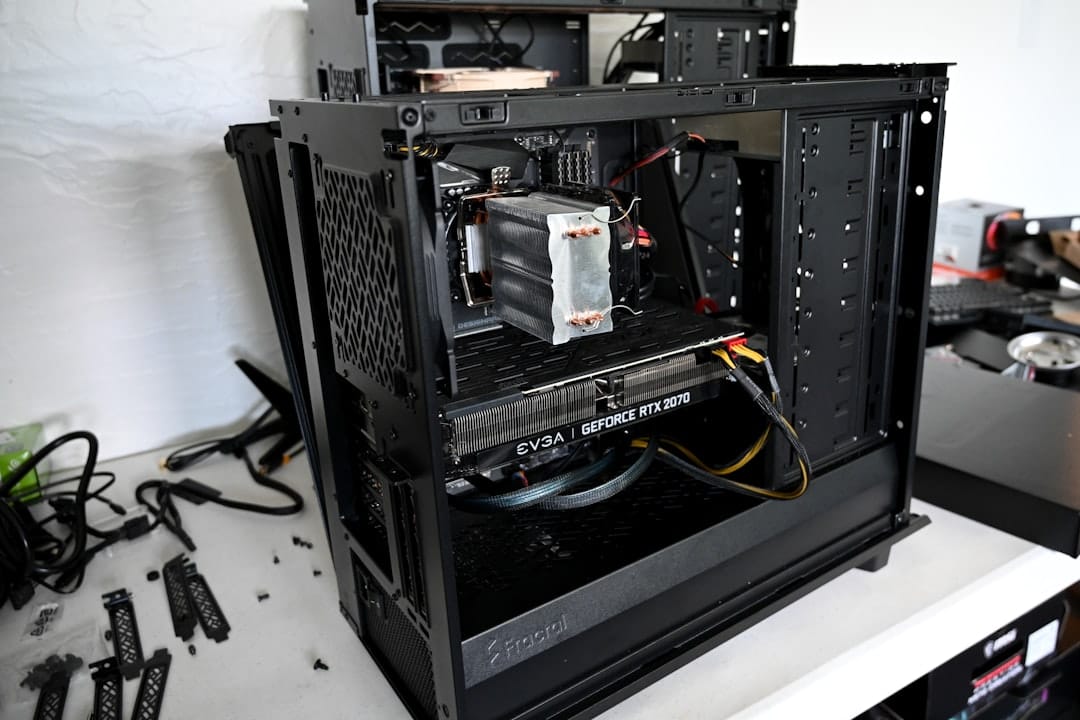
The Raspberry Pi 5 and the Intel N100 mini PC represent two fundamentally different approaches to low-power computing. The Pi 5 is a highly integrated, community-driven, single-board computer (SBC) that requires you to source your own power supply, case, and storage. Its strength lies in its massive ecosystem, GPIO pins for hardware tinkering, and exceptionally low idle power draw. In contrast, an N100 mini PC, such as models from Beelink, Trigkey, or Kamrui, is a complete, ready-to-run system. It houses the efficient Intel N100 processor (a modern x86 chip with four Gracemont cores), built-in storage, RAM, and multiple ports in a fanless or actively cooled palm-sized chassis. This showdown isn't just about chips; it's about choosing between a build-it-yourself toolkit and a pre-assembled appliance for your server needs.
Key Specifications
Here’s a breakdown of the core hardware you’re comparing. Note that the Pi 5 requires additional purchases to become a functional system, while the mini PC is typically complete.
| Component | Raspberry Pi 5 (Board Only) | Typical Intel N100 Mini PC (e.g., Beelink S12 Pro) |
|---|---|---|
| CPU Architecture | ARM Cortex-A76 (4x 2.4GHz) | x86 Intel Alder Lake-N (4 Cores, 4 Threads, up to 3.4GHz) |
| GPU | VideoCore VII (OpenGL ES 3.1, Vulkan 1.2) | Intel UHD Graphics (24 EU) |
| RAM | 4GB or 8GB LPDDR4X-4267 (on-board) | 8GB or 16GB DDR4 or DDR5 (soldered or socketed) |
| Storage | microSD slot, PCIe 2.0 x1 for NVMe (via M.2 HAT) | Typically 256GB/512GB NVMe SSD, sometimes with extra SATA bay |
| Networking | Gigabit Ethernet (dedicated PCIe), Dual-band 802.11ac Wi-Fi | Gigabit Ethernet (2.5GbE on some models), Wi-Fi 6 often standard |
| Video Out | 2x micro-HDMI (4kp60) | 1-2x HDMI, sometimes DisplayPort |
| USB Ports | 2x USB 3.0, 2x USB 2.0 | 3-4x USB 3.2 Gen 2, 1-2x USB 2.0 |
| Power | 5V/5A (27W) via USB-C, ~5W-12W typical under load | 12V/3A (36W) DC barrel jack, ~6W-20W typical under load |
| Expandability | 40-pin GPIO, PCIe FPC connector, RTC battery header | Internal M.2 slots (NVMe, sometimes SATA or Wi-Fi), possible RAM upgrade |
| OS Support | Raspberry Pi OS (Debian), wide ARM Linux/BSD support | Any x86/x64 OS: Linux, Windows, TrueNAS, Proxmox, etc. |
Critical Context: The base Pi 5 board is just the beginning. A functional server setup requires at minimum a quality 5V/5A USB-C PSU ($12), an NVMe SSD and M.2 HAT ($40+), and a case with cooling (~$15). This adds ~$70 to the board's $60 (4GB) or $80 (8GB) price tag.
Performance Benchmarks
While both are efficient, the N100 holds a clear performance advantage in traditional computing tasks due to its more powerful x86 cores and faster storage interface.
CPU Performance:
- Raspberry Pi 5 (4-core ARM A76): Geekbench 6 scores hover around ~600 (Single-core) and ~1800 (Multi-core). This is a massive leap from the Pi 4, making it very capable for lightweight containerized services.
- Intel N100 (4-core/4-thread x86): Geekbench 6 scores are typically ~1100 (Single-core) and ~3300 (Multi-core). In PassMark CPU tests, it scores around 3800-4000. This gives it roughly 1.8x the single-threaded and 2x the multi-threaded performance of the Pi 5.
Real-World Server Tasks:
- Compilation (e.g.,
make): The N100 will consistently finish minutes ahead of the Pi 5 due to superior single-core speed. - Transcoding: This is the N100's knockout punch. Its UHD Graphics with Quick Sync can effortlessly hardware-transcode multiple 1080p or 4K video streams in Plex or Jellyfin. The Pi 5's VideoCore VII has some encoding/decoding capabilities (via
libcameraor OMX), but support in media servers is patchy and far less powerful. - Virtualization: The N100 supports Intel VT-x and VT-d, allowing you to run lightweight virtual machines in Proxmox or ESXi efficiently. The Pi 5's ARM virtualization is less mature for general-purpose use.
- Web/Database Servers: Both handle lightweight web apps (nginx, Apache) and databases (PostgreSQL, MySQL) well for low-to-moderate traffic. The N100 will handle higher concurrent connections and complex queries more smoothly.
Storage & I/O: This is a major bottleneck for the Pi 5. Its PCIe 2.0 x1 lane to the NVMe HAT limits SSD speeds to ~450-500 MB/s. A typical NVMe SSD in an N100 mini PC runs on PCIe 3.0 x4, achieving 2,000-3,500 MB/s. For database operations or file serving many small files, this makes a tangible difference.
Power Consumption Results
Power efficiency is where the Raspberry Pi 5 truly shines, though modern N100 systems are impressively frugal for x86 hardware.
Based on community measurements using smart plugs and Kill-A-Watt meters, here are the realistic power bands:
| Scenario | Raspberry Pi 5 (with NVMe SSD, active cooling) | Intel N100 Mini PC (NVMe SSD, fanless or low-RPM fan) |
|---|---|---|
| Idle (OS loaded, no load) | 2.5W - 4.5W | 6W - 10W |
| Moderate Load (e.g., Docker containers) | 5W - 9W | 10W - 15W |
| Heavy Load (CPU stress test) | 10W - 12W (peak) | 18W - 25W (peak, PL2 burst) |
| Annual Energy Cost (Idle, @ $0.15/kWh) | ~$3.30 - $5.90 | ~$7.90 - $13.10 |
Key Takeaways:
- The Pi 5 idles at roughly half the wattage of a typical N100 mini PC. Over a year, this can save a few dollars and, more importantly for some, reduce ambient heat and fan noise (if using passive cooling).
- Under moderate server loads (which is 99% of the time for most homelabs), the Pi 5 often operates in the 5-7W range, while the N100 sits around 10-12W.
- The N100 can burst to higher power (20W+) for short periods during intense tasks, which the Pi 5 simply cannot match due to its strict power envelope.
Value & Price Analysis
Let's break down the total cost of ownership (TCO) for a basic, functional server setup.
Raspberry Pi 5 Server Bundle (8GB Model):
- Raspberry Pi 5 8GB Board: $80
- Official Active Cooler or quality third-party case with fan: $10-$25
- 27W USB-C Power Supply: $12
- 512GB NVMe SSD (e.g., WD SN600): $45
- NVMe HAT/M.2 Adapter (e.g., Pimoroni NVMe Base): $15
- Estimated Total (self-assembled): ~$162 - $177
Intel N100 Mini PC (e.g., Beelink EQ12 / Trigkey S3):
- Complete system with 16GB RAM & 500GB NVMe SSD: Frequent sales put this at $180 - $220. No extras needed besides maybe a storage drive.
Analysis: The price gap has nearly vanished. For roughly the same investment ($170-$220), you get either a fully assembled, more powerful x86 system (N100) or a capable, ultra-efficient ARM system you built yourself (Pi 5).
- The Pi 5's value is in its extreme efficiency and unparalleled GPIO hardware ecosystem. You pay for flexibility and optimal energy use.
- The N100's value is in out-of-the-box performance and x86 compatibility. You get a faster CPU, better I/O, and transcoding capabilities for essentially the same money.
For anyone who doesn't need GPIO pins, the N100 mini PC presents a staggering value proposition that is hard to ignore in 2026.
Best Use Cases
Your project's requirements will point you to the clear winner.
Choose the Raspberry Pi 5 if...
- Ultra-Low Power is the #1 Priority: You want the absolute lowest idle wattage for a 24/7 server.
- You Need GPIO Hardware Access: You're building a sensor hub, automating physical devices, or need to interface with custom hardware (e.g., via Node-RED, Home Assistant with add-ons).
- You're Deep in the ARM Ecosystem: Your software stack and Docker images are all ARM-native, and you prefer that environment.
- You Enjoy the Build Process: The act of assembling the HATs, choosing a case, and optimizing cooling is part of the fun.
Choose the Intel N100 Mini PC if...
- You Need Media Transcoding: Running Plex, Jellyfin, or Frigate NVR with Coral USB? The N100's Quick Sync is a non-optional feature.
- Compatibility is Critical: You rely on software that only has x64 binaries, or you want to run proprietary applications that have no ARM version.
- You Want a Turn-Key Appliance: You just want to plug in a drive, install an OS, and have a fast, quiet server without sourcing parts.
- Future-Proofing for VMs: You see yourself diving into lightweight virtualization with Proxmox in the future.
Buying Recommendation
Based on the current market (2026), here is our specific buying advice.
For the Raspberry Pi 5 Route:
- Board: Get the 8GB model ($80). The extra RAM is worth it for Docker and future-proofing.
- Cooling: The Official Raspberry Pi Active Cooler is effective and simple. For a silent, fanless build, the Flirc Raspberry Pi 5 Case is an excellent performer.
- Storage: Skip microSD for server duty. Use the Pimoroni NVMe Base or the Geekworm X1001 adapter with a 512GB NVMe SSD like the Western Digital SN600 or TeamGroup MP44L.
- Power: Use the Official Raspberry Pi 27W USB-C Power Supply or a known-good PD-compliant alternative.
For the Intel N100 Route:
- Model: Look for models with 16GB of RAM and a 500GB+ NVMe SSD. The Beelink EQ12 or Minisforum UN100 are consistently well-reviewed. If you need 2.5GbE networking, the Beelink S12 Pro is a great choice.
- Tip: Monitor deal sites like Slickdeals. These mini PCs go on sale very frequently. Paying more than $220 for a 16GB/500GB N100 system in 2026 is unnecessary.
- OS: For a pure server, install a lightweight Linux distribution like Ubuntu Server 24.04 LTS or Debian 12. For an all-in-one homelab OS, Proxmox VE 8 runs beautifully on the N100.
Final Verdict
Both the Raspberry Pi 5 and the Intel N100 mini PC are exceptional platforms for the modern low-power home server. The "best" choice is no longer clear-cut and depends almost entirely on your specific needs.
The Raspberry Pi 5 remains the king of ultra-efficient, hardware-hacker home servers. If your goal is to minimize watts, cost over a 5-year period, or you physically interact with the world via GPIO, the Pi 5 is a triumphant, capable evolution of the platform. It sips power like no x86 system can.
However, for the majority of home server users in 2026, the Intel N100 mini PC is the more pragmatic and powerful choice. At a nearly identical total price, it delivers significantly better CPU performance, industry-standard hardware transcoding, faster storage, and worry-free x86 software compatibility right out of the box. Its power consumption, while higher than the Pi 5's, is still impressively low for its capability.
Our general recommendation: For a first server or a general-purpose homelab node, start with an N100 mini PC. Its blend of performance, efficiency, and simplicity is unmatched at this price point. Choose the Raspberry Pi 5 for a specialized, ultra-low-power appliance, an educational hardware platform, or when your energy bill and environmental footprint are the supreme metrics. You truly can't go wrong with either, which is a fantastic position for hobbyists to be in.
You may also like

Hardware
Intel N305 vs N100 Home Server: Power & Performance Compared (2026)
Intel N305 vs N100 for home servers in 2026. Real power consumption benchmarks, multi-core performance tests, price-per-watt analysis, and which CPU to buy for your homelab.
low-powern100n305

Hardware
Best Home Server for Beginners 2026: Complete Starter Guide
New to home servers? Start here. Compare hardware options, discover 8 popular use cases, and learn how to run 10 self-hosted services on an Intel N100 mini PC for just $10/year in electricity.
beginnersgetting-startedlow-power
Hardware
Intel N97 vs N100 vs N305: Low Power CPU Showdown (2026)
Compare Intel N97, N100, and N305 for home servers. Benchmarks, power consumption, transcoding tests, and which CPU to buy in 2026.
low-powern100n305
Related Tools
Ready to build your server?
Check out our build guides for step-by-step instructions.
View Build Guides