
← Back to Hardware Reviews
Buying Used Mini PCs: HP EliteDesk vs Dell OptiPlex vs ThinkCentre (2026)
How to buy a used enterprise mini PC for your home server. HP EliteDesk, Dell OptiPlex, and Lenovo ThinkCentre compared on eBay value, power consumption, upgrade paths, and reliability.
Published Mar 25, 2026Updated Mar 25, 2026
elitedesklow-poweroptiplexthinkcentreused-hardware
Building your first low-power home server doesn't have to break the bank or the power meter. The second-hand market is flooded with ex-corporate mini PCs from HP, Dell, and Lenovo, offering a stunning balance of performance, efficiency, and affordability. This guide will help you navigate the sea of EliteDesks, OptiPlexes, and ThinkCentres to find the perfect, penny-pinching platform for Linux, Proxmox, or a light Windows server.
Overview
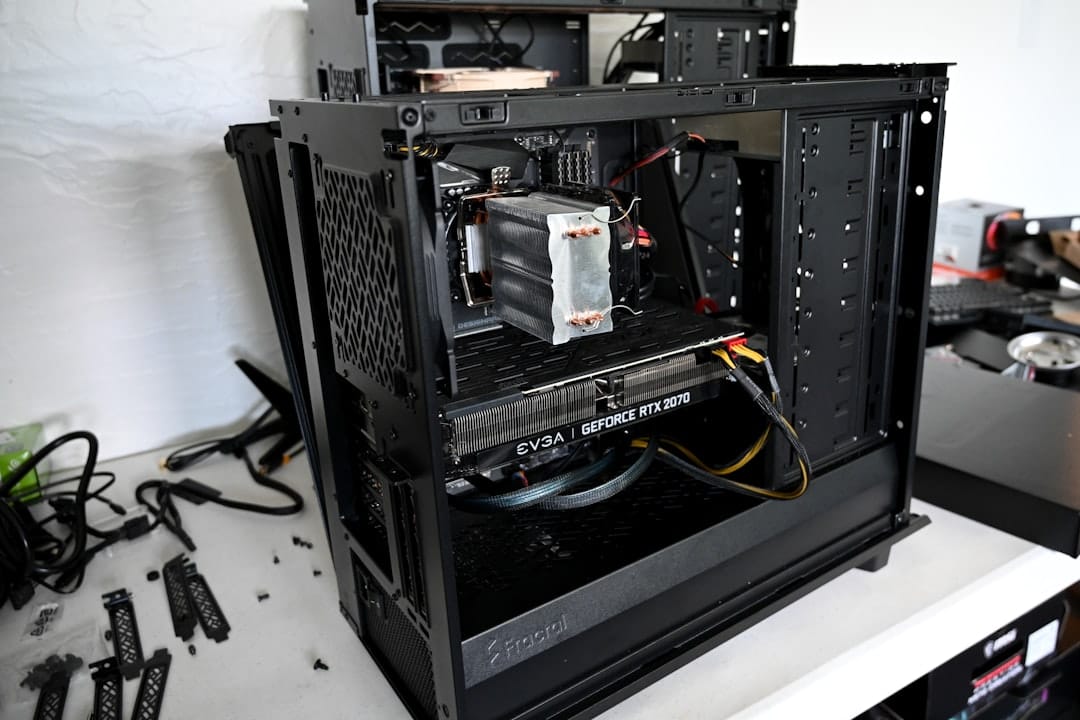
For over a decade, major corporations have been refreshing their desktop fleets on a 3-5 year cycle, leading to a massive, sustained influx of off-lease mini PCs into the secondary market. For the home server enthusiast, this is a goldmine. Models like the HP EliteDesk 800 G2/G3, Dell OptiPlex 3040/7050 Micro, and Lenovo ThinkCentre M720q/M900 Tiny pack modern Intel Core i5 and i7 processors, ample RAM, and SSD storage into sub-1L chassis, all while being designed for reliability and manageability. They represent the "sweet spot" for low-power home servers, offering more than enough grunt for a dozen containers and VMs while sipping power at levels that won't give you bill shock. This article focuses on the most common and valuable generations you'll find within the $50–$200 budget range: typically 6th to 8th Generation Intel Core (Skylake, Kaby Lake).
Key Specifications
The key to navigating this market is understanding the generational model numbers. We are primarily looking at the "tiny" or "micro" form factors. Performance is largely dictated by the CPU generation and tier (i3, i5, i7). All these systems use laptop-style SODIMM memory and M.2 NVMe or 2.5" SATA drives.
Here’s a breakdown of the common models you'll encounter:
| Brand | Series (Form Factor) | Example Models (Gen) | CPU Range (Typical) | Max RAM | Storage Bays | Special Features |
|---|---|---|---|---|---|---|
| HP EliteDesk | 800 G2/G3/G4 Mini | 800 G2 (6th), G3 (7th), G4 (8th) | i5-6500T to i7-8700T | 32GB/64GB | 1x M.2 2280, 1x 2.5" SATA | PCIe riser slot (for NIC, SATA); Excellent internal layout |
| Dell OptiPlex | 3040/7050/7060 Micro | 3040 (6th), 7050 (7th), 7060 (8th) | i5-6500T to i7-8700T | 32GB | 1x M.2 2280, 1x 2.5" SATA | Often has 2.5" caddy; M.2 may be SATA/NVMe; M.2 WiFi slot |
| Lenovo ThinkCentre | M720q / M900 Tiny | M720q (8th), M900 (6th/7th) | i5-6500T to i7-8700T | 32GB/64GB | 1x M.2 2280, 1x 2.5" SATA | Rear "stack" port for proprietary NIC; M.2 WiFi slot |
Crucial Specs Explained:
- CPU Suffix 'T': These are low-power, lower-clock variants (35W TDP). Perfect for our low-power goal. Non-T models (e.g., i5-6500) exist but consume more power.
- Max RAM: While official specs often state 32GB, many community members have successfully installed 2x32GB (64GB) in 8th Gen models. Check the manufacturer's PSREF for official support.
- Storage: The M.2 slot can be tricky. Always verify if it's SATA-only or NVMe capable. 8th Gen systems almost always support NVMe. Some models also have a dedicated M.2 slot for WiFi/BT, which can sometimes be repurposed (with adapters) for extra storage.
Performance Benchmarks
Raw CPU performance is the primary driver for how many services you can run. For context, a modern Raspberry Pi 5 scores around 500-600 in Geekbench 5 Single-Core. These used mini PCs offer 3-4x that performance.
Here are approximate Geekbench 5 (GB5) and PassMark CPU scores for common CPUs in this bracket, based on aggregated user submissions:
| CPU Model | Cores/Threads | GB5 Single-Core | GB5 Multi-Core | PassMark (~) | Typical Model Found In |
|---|---|---|---|---|---|
| i5-6500T | 4C/4T | 800 | 2,200 | 4,200 | HP 800 G2, Dell 3040, Lenovo M900 |
| i5-7500T | 4C/4T | 850 | 2,500 | 4,600 | HP 800 G3, Dell 7050 |
| i5-8500T | 6C/6T | 950 | 3,500 | 7,100 | HP 800 G4, Dell 7060, Lenovo M720q |
| i7-6700T | 4C/8T | 900 | 3,200 | 6,200 | Higher-end G2/3040/M900 |
| i7-8700T | 6C/12T | 1,050 | 4,100 | 9,000 | Higher-end G4/7060/M720q |
What this means for you: An i5-8500T is a massive leap over a 4-thread CPU due to its two extra physical cores, making it ideal for virtualization under Proxmox or VMware ESXi. An i7-8700T with 12 threads is a homelab powerhouse. For simple NAS duties, a media server (Jellyfin/Plex with tone mapping), and 5-10 Docker containers, an i5-6500T is perfectly sufficient.
Power Consumption Results
This is the critical section for a low-power homeserver. Power is measured at the wall, with the system at idle in its stock configuration (SSD, 8-16GB RAM). The numbers below are averages from community testing on platforms like ServeTheHome and Reddit.
| Model (Example Config) | Idle Power (Linux) | Load Power (CPU Stress) | Notes |
|---|---|---|---|
| HP EliteDesk 800 G2 (i5-6500T, SSD) | 8W - 10W | ~40W | Extremely efficient idle. BIOS power settings are excellent. |
| Dell OptiPlex 3040 Micro (i5-6500T, SSD) | 10W - 12W | ~42W | Slightly higher idle, but very consistent. |
| Lenovo ThinkCentre M900 Tiny (i5-6500T, SSD) | 9W - 11W | ~41W | On par with HP. Good C-states management. |
| HP EliteDesk 800 G4 (i5-8500T, NVMe) | 12W - 15W | ~55W | Extra cores and NVMe drive increase baseline. |
| Dell OptiPlex 7060 Micro (i7-8700T, NVMe) | 14W - 18W | ~65W | Highest performance comes with a higher idle. |
How to Achieve the Lowest Idle:
- Use Linux: A headless Ubuntu Server or Proxmox will idle lower than Windows 10/11.
- Enable Power Savings in BIOS: Look for settings like
Power Idle,C-States, andPower Management. Set them toLow PowerorMax Power Savings. - Disable Unused Hardware: Turn off serial/parallel ports, audio, or unused NICs in BIOS.
- Tune Linux: Use
tlporpowertopto auto-tune.
You can make this permanent by creating a service:sudo apt install powertop sudo powertop --auto-tunesudo systemctl enable powertop.service
Value & Price Analysis (eBay Focus, 2026 Market)
Prices fluctuate, but the value hierarchy is consistent. As of early 2026, here's what you can expect for a complete, ready-to-go system (CPU, 8GB RAM, 256GB SSD, power adapter):
| Target System | Approx. Price Range | Value Verdict |
|---|---|---|
| HP EliteDesk 800 G2/G3 (i5-6/7xxxT) | $50 - $90 | Best Bang-for-Buck. G2 is often the cheapest entry. G3 adds M.2 NVMe support. |
| Dell OptiPlex 3040/7050 (i5-6/7xxxT) | $60 - $100 | Slight Premium. Dells often command a $5-$15 premium over equivalent HPs. Good availability. |
| Lenovo ThinkCentre M900 (i5-6/7xxxT) | $70 - $110 | Pricey but Feature-Rich. Often the most expensive, but the rear stack adapter is unique. |
| HP/Dell/Lenovo (i5-8500T / 8th Gen) | $120 - $200 | Performance Tier. The 6-core jump justifies the price for Proxmox users. |
Buying Tips:
- Search Broadly: Use terms like "mini pc i5-6500T" or "tiny desktop i5" to catch all brands.
- Check Photos for VGA: The presence of a VGA port is a dead giveaway for a 6th/7th Gen system (older). DisplayPort-only usually means 8th Gen or newer.
- "For Parts" vs. "Tested": A "for parts" unit missing RAM/SSD can be a steal if you have spares. "Tested" systems are less risky for beginners.
- Offer/Bid: Don't be afraid to make an offer 10-15% below the asking price on "Buy It Now" listings.
Best Use Cases
These mini PCs are incredibly versatile. Your choice of OS and software stack defines their role.
Lightweight Proxmox / ESXi Host
Recommended Model: HP EliteDesk 800 G4 (i5-8500T) or Dell 7060 (i7-8700T). With 32-64GB of RAM and a 6-core/12-thread CPU, you can comfortably run 10-15 lightweight VMs and LXC containers. Ideal for learning Kubernetes (k3s), running a Windows VM, a firewall (OPNsense), and several application servers.
# On Proxmox, to reduce power consumption of VMs, ensure the CPU type is set to 'host' and disable unnecessary devices in the VM hardware.
All-in-One Home Server (Docker on Linux)
Recommended Model: HP EliteDesk 800 G3 (i5-7500T) or Dell 7050 (i5-7500T). A perfect Docker host. Use Docker Compose or Portainer to manage services like:
- Media: Jellyfin (transcoding is possible with 7th Gen+ Quick Sync), Sonarr, Radarr.
- Home Automation: Home Assistant, Node-RED.
- Networking: Pi-hole/AdGuard Home, WireGuard VPN server.
- File/Backup: Samba NAS, Nextcloud, UrBackup.
Dedicated Low-Power NAS
Recommended Model: Any unit with a PCIe riser (HP G2/G3/G4 is best). The HP's PCIe riser lets you add a 2-port or 4-port SATA card. Combine this with the internal 2.5" bay and you can build a 3-5 drive NAS using TrueNAS Scale or OpenMediaVault. Note: You'll need external drive enclosures or a DAS.
Quiet, Efficient Desktop
While not a server, these make fantastic daily drivers for office work, web browsing, and light coding. Throw in a low-profile GPU in the HP's riser (if it's a full-height slot), and you can even do some light gaming.
Buying Recommendation
Your final choice depends on your top priority.
Buy an HP EliteDesk 800 G3/G4 if... You want the best balance of price, power efficiency, and internal expandability. The PCIe riser is a massive, unique advantage for adding a NIC, SATA card, or even a low-profile GPU. The BIOS is power-optimized, and community support is extensive.
Buy a Dell OptiPlex 7050/7060 Micro if... You value widespread availability and a slightly more polished, user-friendly BIOS/UEFI. They are built like tanks and are incredibly reliable. The M.2 WiFi slot can be handy for adding a second network interface via an M.2 A+E Key to RJ45 adapter.
Buy a Lenovo ThinkCentre M720q if... You need a second built-in network port without using the main PCIe slot. The proprietary rear "stack" adapter (like the 01AJ940) adds a second Intel NIC, leaving the PCIe slot free for something else. This makes it the best choice for a dedicated, compact firewall/router. Be prepared to pay a bit more.
Avoid models with 4th/5th Gen Intel CPUs (like the Dell 3020/HP 800 G1) unless they are under $40. Their older DDR3 memory and higher-power architecture (22nm vs 14nm) make them less efficient and slower per watt.
Final Verdict
For the vast majority of newcomers building a low-power home server, the HP EliteDesk 800 G3 Mini (7th Gen Intel) represents the ideal starting point. It hits the perfect trifecta: readily available on eBay for $70-$120, supports fast NVMe storage, has that invaluable PCIe expansion slot, and delivers fantastic idle power consumption of 9-12 watts. It provides more than enough performance for Docker and light virtualization, while leaving room in your budget for extra RAM and storage.
If your focus is strictly on running a dedicated firewall/router, the Lenovo ThinkCentre M720q with a stack NIC is the specialized champion. For those who need maximum VM core/thread count on a tight budget, hunting for a deal on an HP EliteDesk 800 G4 or Dell OptiPlex 7060 with an i5-8500T is the best path.
By choosing one of these ex-corporate workhorses, you're not just saving money—you're getting a reliable, serviceable, and incredibly efficient piece of hardware that will form the silent, capable heart of your homelab for years to come.
You may also like

Hardware
Best Used Mini PCs for Home Servers in 2026 (Under $400)
A practical 2026 buyer guide to used enterprise mini PCs for home servers, with power, upgrade path, and budget-tier recommendations.
elitedesklow-poweroptiplex
Hardware
Dell Optiplex Micro as Home Server: The $50 Powerhouse (2026)
A used Dell Optiplex 3080 Micro costs $55–$80 on eBay and outperforms many new mini PCs for home server workloads. Real power measurements, storage options, and complete Ubuntu 24.04 setup guide.
dell-optiplexlow-powerrefurbished

Hardware
Raspberry Pi 5 vs Intel N100 Mini PC: Home Server Showdown (2026)
Raspberry Pi 5 vs Intel N100 mini PC for home servers. Performance benchmarks, power consumption, Docker compatibility, storage expansion, and total cost of ownership compared.
low-powern100raspberry-pi-5
Related Tools
Ready to build your server?
Check out our build guides for step-by-step instructions.
View Build Guides